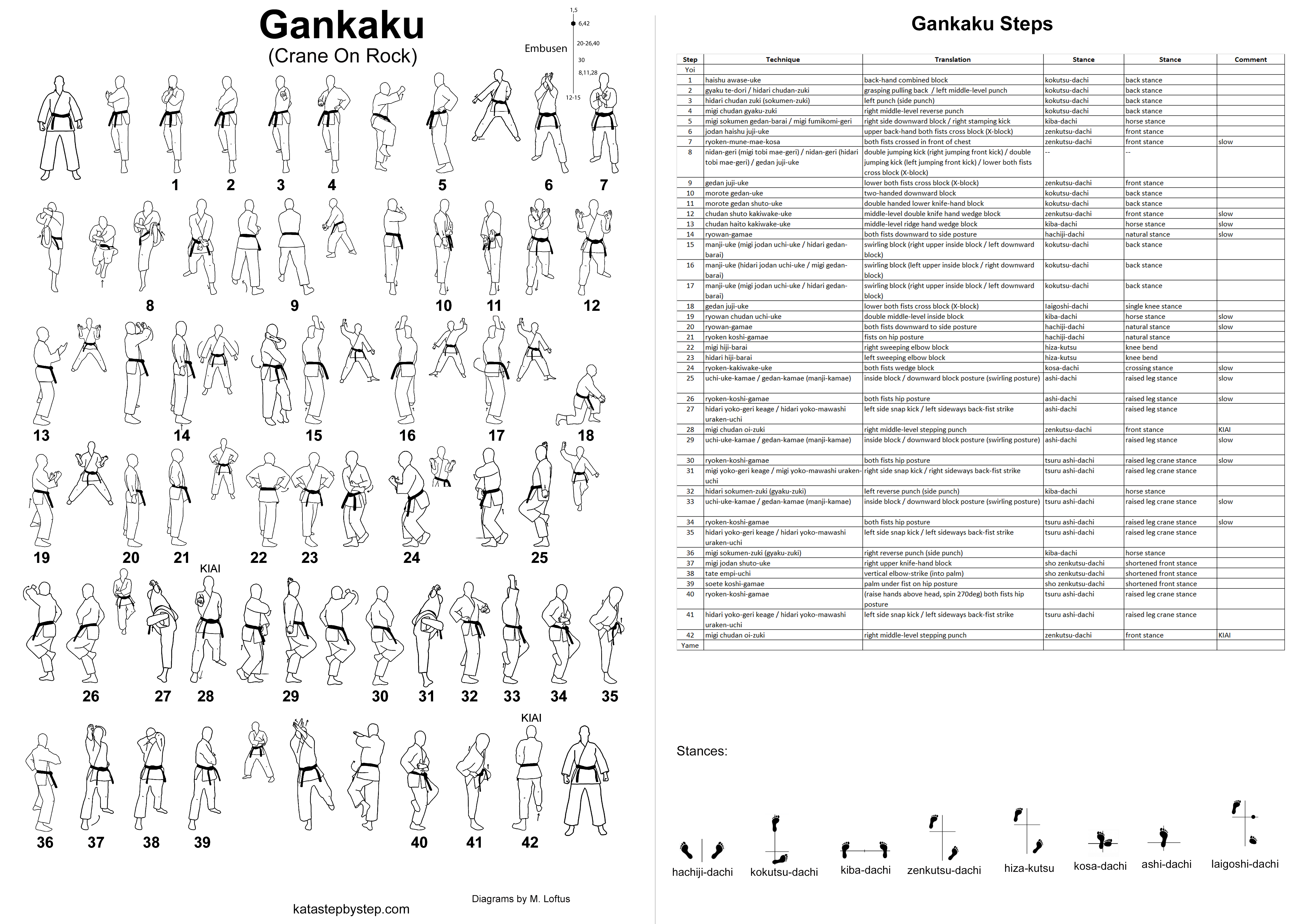
About This Kata
| Name | Gankaku [岩鶴] |
| Translation | Crane on a Rock |
| Style | Shotokan |
| History | Originally called Chintō (or Mukandi in Okinawa), the kata is named after a Chinese sailor or martial artist who became shipwrecked on Okinawa during the 19th century. According to tradition, Sōkon Matsumura challenged Chintō but was so impressed by his skills that he learned from him instead. The kata is said to have emerged from this exchange, integrating Chinese methods — particularly White Crane and Northern Shaolin influence — with Okinawan principles. Itosu Ankō preserved the form and Funakoshi brought it to Japan, renaming it Gankaku (Crane on a Rock) to reflect its signature one-legged stances and to move away from Chinese-sounding names. |
| Lineage | Chintō (Chinese sailor/martial artist) → Sōkon Matsumura (Shuri-te) → Itosu Ankō → Gichin Funakoshi (Shōtōkan) |
Crane On a Rock (Shotokan Kata)