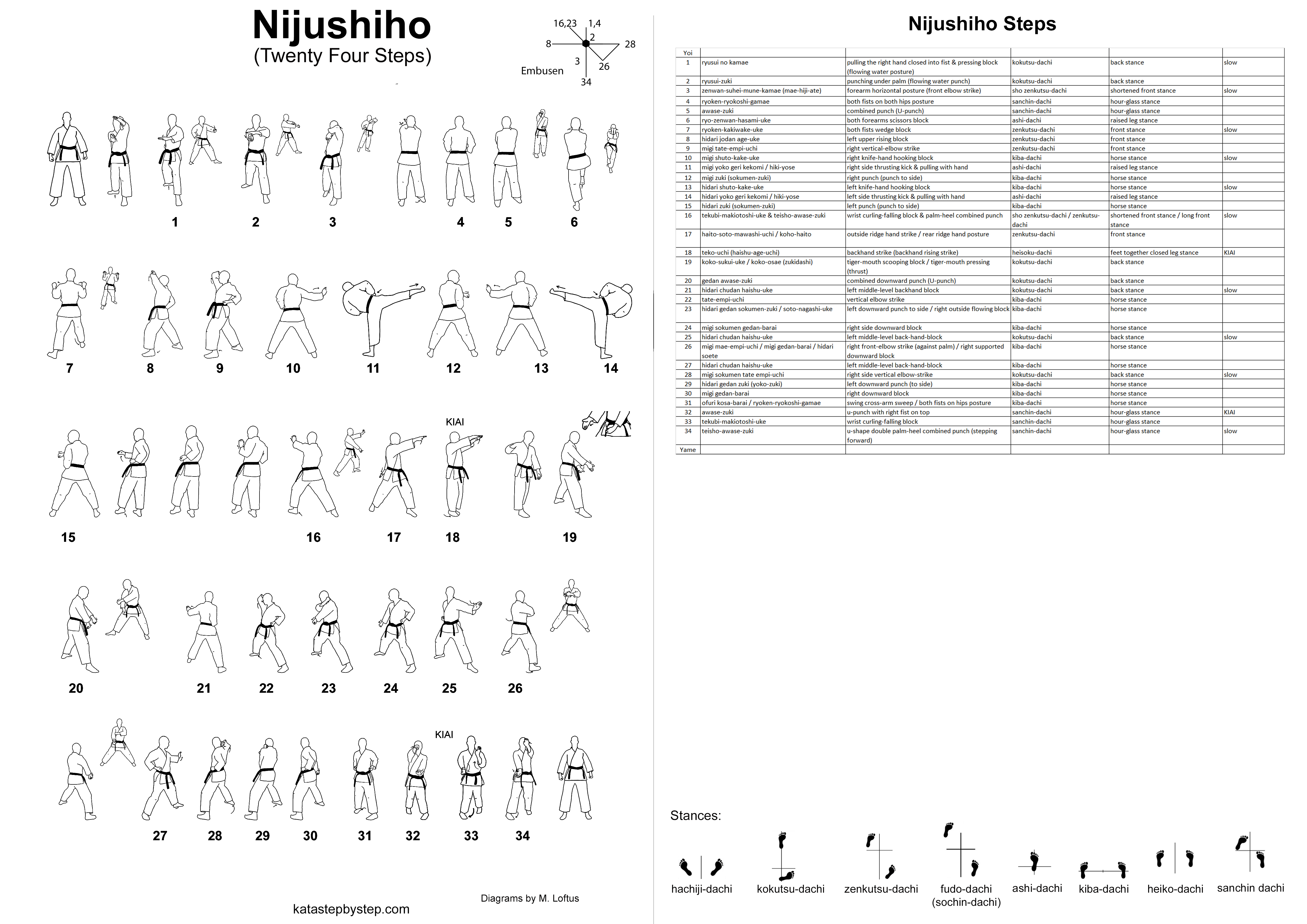
About This Kata
| Name | Nijushiho [二十四歩] |
| Translation | Twenty-Four Steps |
| Style | Shotokan |
| History | Originally known as Niseishi in Okinawan pronunciation (the same characters 二十四), the kata has roots in both the Naha-te and Shuri-te lineages as well as the Aragaki school in Tomari. The name was standardised by Gichin Funakoshi as part of his effort to Japanise Okinawan and Chinese-sounding names. The number 24 may refer to the kata’s distinct movements or phases, though in traditional martial arts, numerical names often carry symbolic rather than strictly technical meaning. The kata likely descended from Southern Chinese martial arts, particularly White Crane or Tiger systems. The Shotokan version came through Kenwa Mabuni’s influence or through Itosu’s teachings, and was adapted with longer stances and more linear transitions. |
| Lineage | Aragaki Seishō → Kenwa Mabuni (Shitō-ryū) → Funakoshi Yoshitaka (Shōtōkan) |
Twenty Four Steps (Shotokan Kata)